HSX BLOG
Why Do Aluminum Die Casting Quotes Vary So Much for the Same Part?
Quick answer: The same aluminum die casting drawing can receive very different quotations because suppliers may be pricing different manufacturing assumptions. The difference is rarely explained by aluminum price alone. Tooling structure, machine requirements, metal flow, cooling, cycle time, secondary machining,
Quick answer: The same aluminum die casting drawing can receive very different quotations because suppliers may be pricing different manufacturing assumptions. The difference is rarely explained by aluminum price alone. Tooling structure, machine requirements, metal flow, cooling, cycle time, secondary machining, finishing, inspection, expected yield and commercial scope can all change the real unit cost.
Based on HSX production and project-review experience, a useful quote comparison starts by asking what manufacturing system each supplier has assumed, not only which unit price is lowest.
1. Why Material Weight Alone Cannot Explain a Die Casting Quote
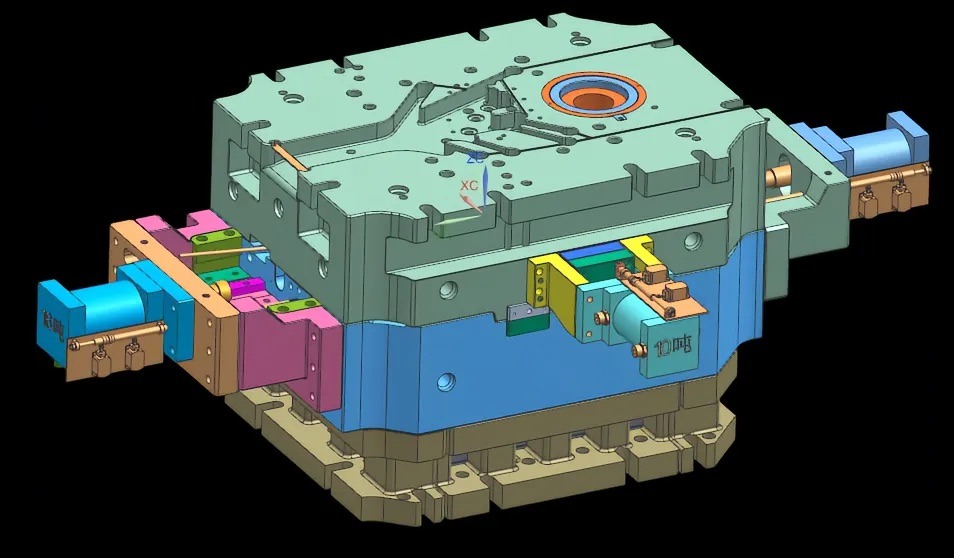
Consider an aluminum controller housing with a finished net weight of about 200 g. The raw aluminum in the finished part may represent only a small part of the quotation. A supplier still has to evaluate tooling, die casting equipment, runner and overflow design, metal flow, cooling, trimming, secondary operations, finishing, inspection, scrap risk, packing and delivery responsibility.
Die casting is not simply a cheaper substitute for CNC machining, and it is not a metal version of plastic injection molding. It becomes economically attractive when geometry, material requirements, expected production volume and tooling investment make sense together.
Different processes create cost differently: CNC is strongly affected by setups, tool paths, tolerance and machine time; sheet metal by nesting and forming routes; die casting by tooling, equipment, flow, cooling, secondary operations and yield.
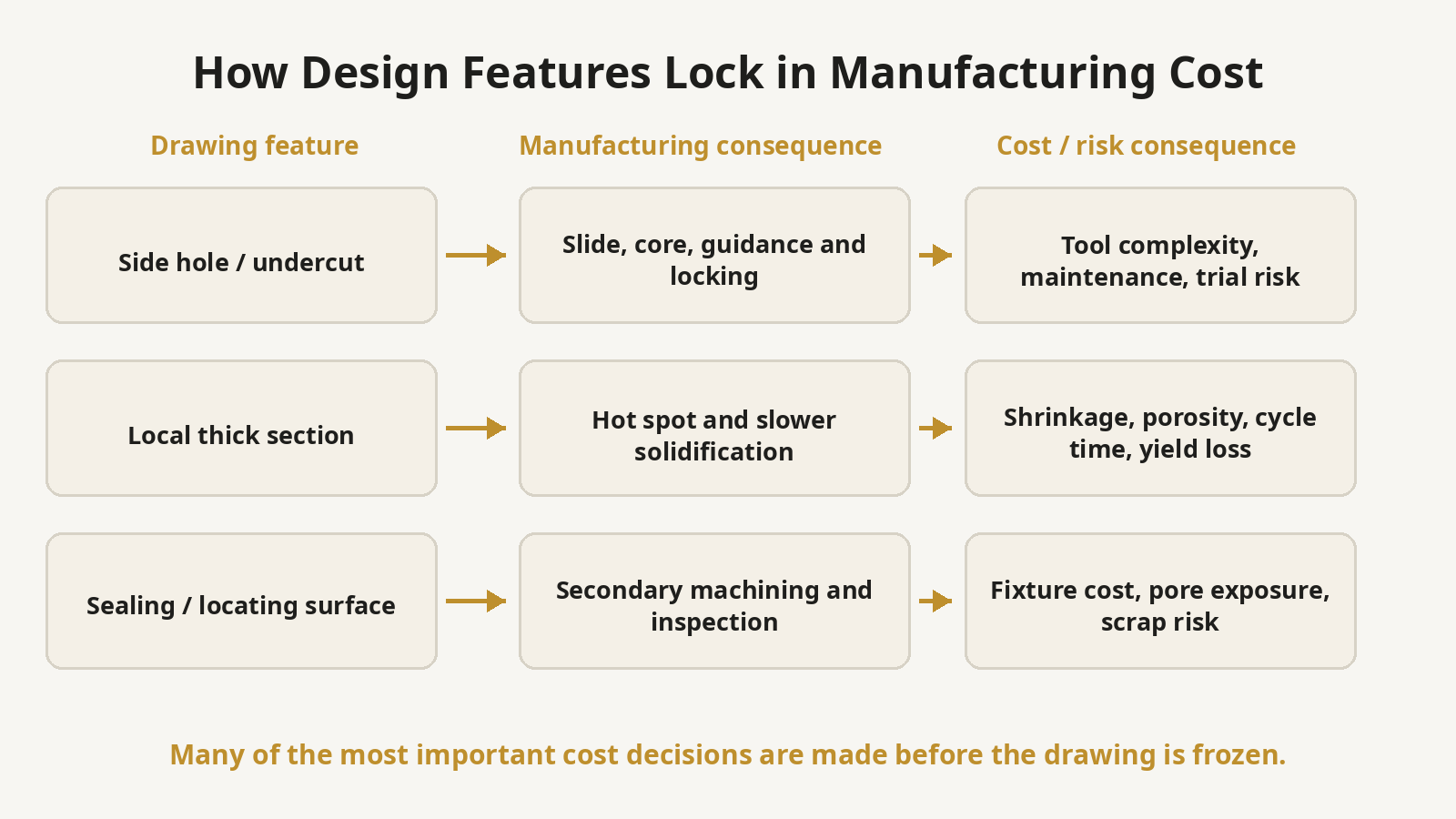
A small CAD feature can create a much larger manufacturing consequence. A side hole can require a slide or core, a local thick section can create a hot spot, and a sealing surface can require machining, fixturing and inspection.
2. Net Part Weight Is Not the Same as Metal Input
A 200 g finished casting should not be costed simply as 200 g multiplied by the aluminum price. Metal entering the process can also include the runner, biscuit, overflows, flash, trimming loss and melting loss.
Some metal may be returned to the melting system under controlled practices, but the applicable rules depend on alloy, customer specifications and functional requirements. Projects with tighter functional requirements may require stricter material-control rules.
Confirm finished net weight, total shot or poured weight and the assumed material utilization.
Confirm the specified aluminum alloy and the controls applied to melting and returned material.
Confirm whether leak-tightness, strength or other functional requirements affect material-control assumptions.
3. An Illustrative Cost Breakdown for a 200 g Aluminum Housing
The following example is only a teaching model. It is not an HSX standard price list and it is not an industry benchmark.
Material input ¥7 + die casting ¥12: finished part, runner/overflow/flash, melting control, machine time, clamping, injection, cooling, opening and trimming cycle.
Tooling amortization ¥10 + secondary machining ¥22: tooling investment, slide structure, expected life, sealing surfaces, locating features, threaded features and required machining.
Deburring/finishing ¥8 + inspection/packing ¥4: trimming, blasting, cleaning, coating, critical dimensions, visual or functional checks, handling and packing.
Yield loss ¥7 + management/delivery/risk ¥10: shrinkage, porosity, deformation, exposed pores, rework, scrap, project management, quality responsibility, payment terms and delivery.
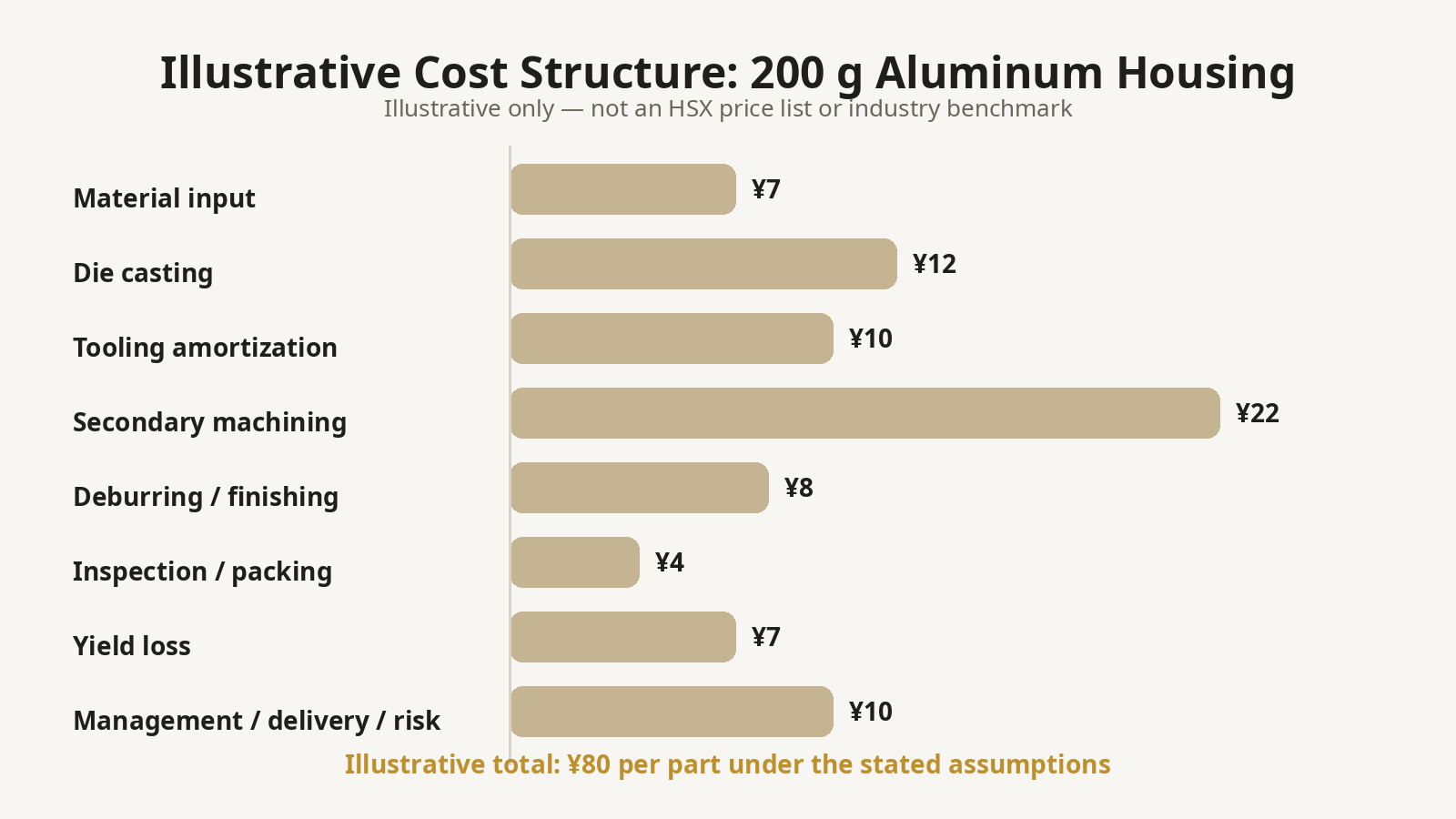
Higher volume can spread tooling cost across more parts. Stable multi-cavity production can reduce equipment cost per piece, while tight leak or cosmetic requirements can increase inspection and yield-related cost. Small quantities can make tooling amortization a larger part of the unit cost.
The useful question is not whether an illustrative ¥80 price is expensive. The useful question is: what manufacturing assumptions are included in that price?
4. How Part Design Locks Cost Into the Manufacturing System
Many die casting costs are determined before the tool is built. Once the tooling concept is committed, the parting line, slides, gates, vents, cooling and many critical details become expensive to change.
4.1 Side Holes and Undercuts Can Require Slides or Cores
A side hole can look like a minor CAD feature. In the die it may require slides, cores, guidance, locking features, actuation and wear surfaces, increasing tooling complexity, trial work, maintenance requirements and long-term stability risk.
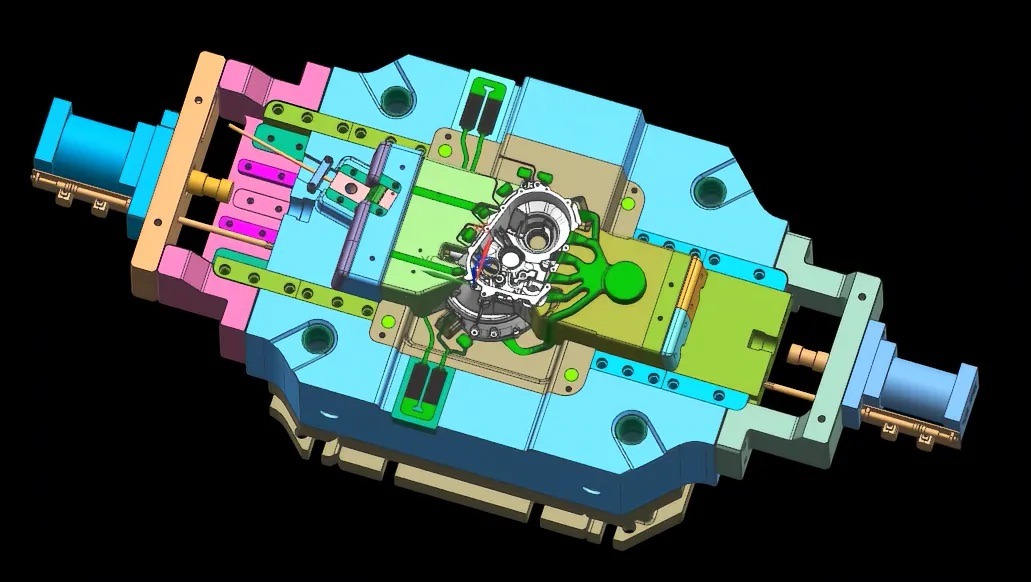
During design review, ask whether the feature can be aligned with the opening direction, formed as a cast blind feature and drilled later, or eliminated by changing the assembly concept.
4.2 Local Thick Sections Can Create Hot Spots and Shrinkage Risk
An abrupt thick section can solidify more slowly than the surrounding wall. The outside may freeze first while the interior continues to contract, increasing the risk of shrinkage, internal porosity and distortion. Some defects do not become visible until a sealing surface is machined or the part is leak tested, after significant value has already been added.
The goal is not to make every wall thinner. Better cost control usually comes from more uniform wall thickness, useful ribs, smoother transitions and fewer unnecessary hot spots.
4.3 A Shape That Can Be Drawn Is Not Automatically Easy to Fill
Molten aluminum must fill the cavity in a very short time while the air inside the cavity must escape. The tooling and process therefore need to consider flow path, gate location, venting, overflows, wall thickness, flow length, die temperature and cooling.
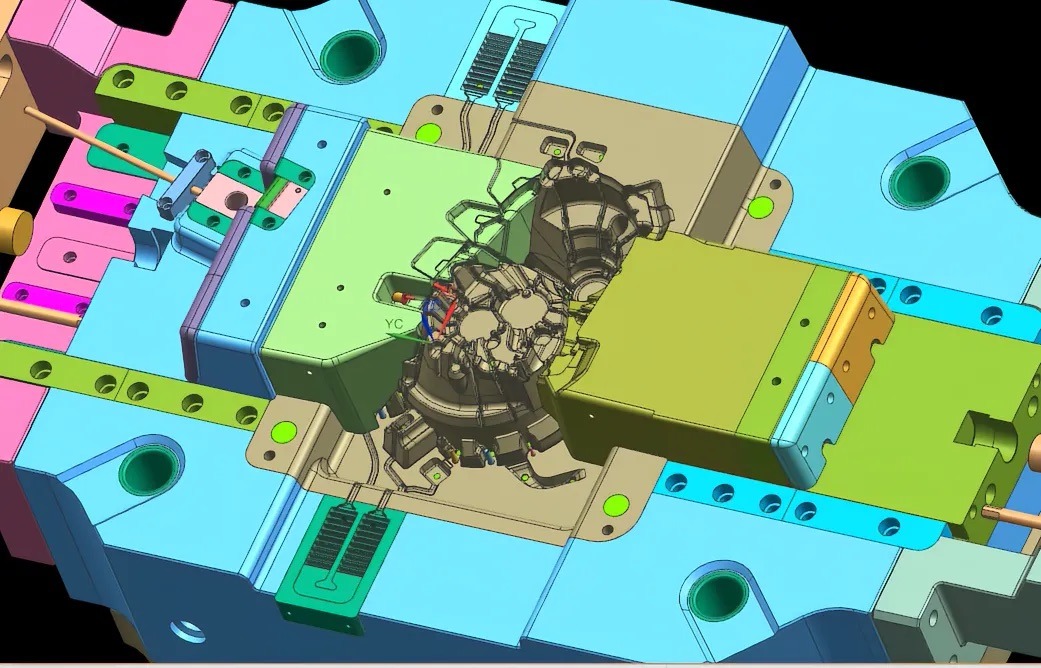
A poor combination can increase the risk of cold shuts, flow marks, trapped gas, porosity, incomplete fill and other local defects. CNC machining asks whether the tool can reach a feature; die casting also asks whether the metal can reach it, the air can escape and the heat can be removed consistently.
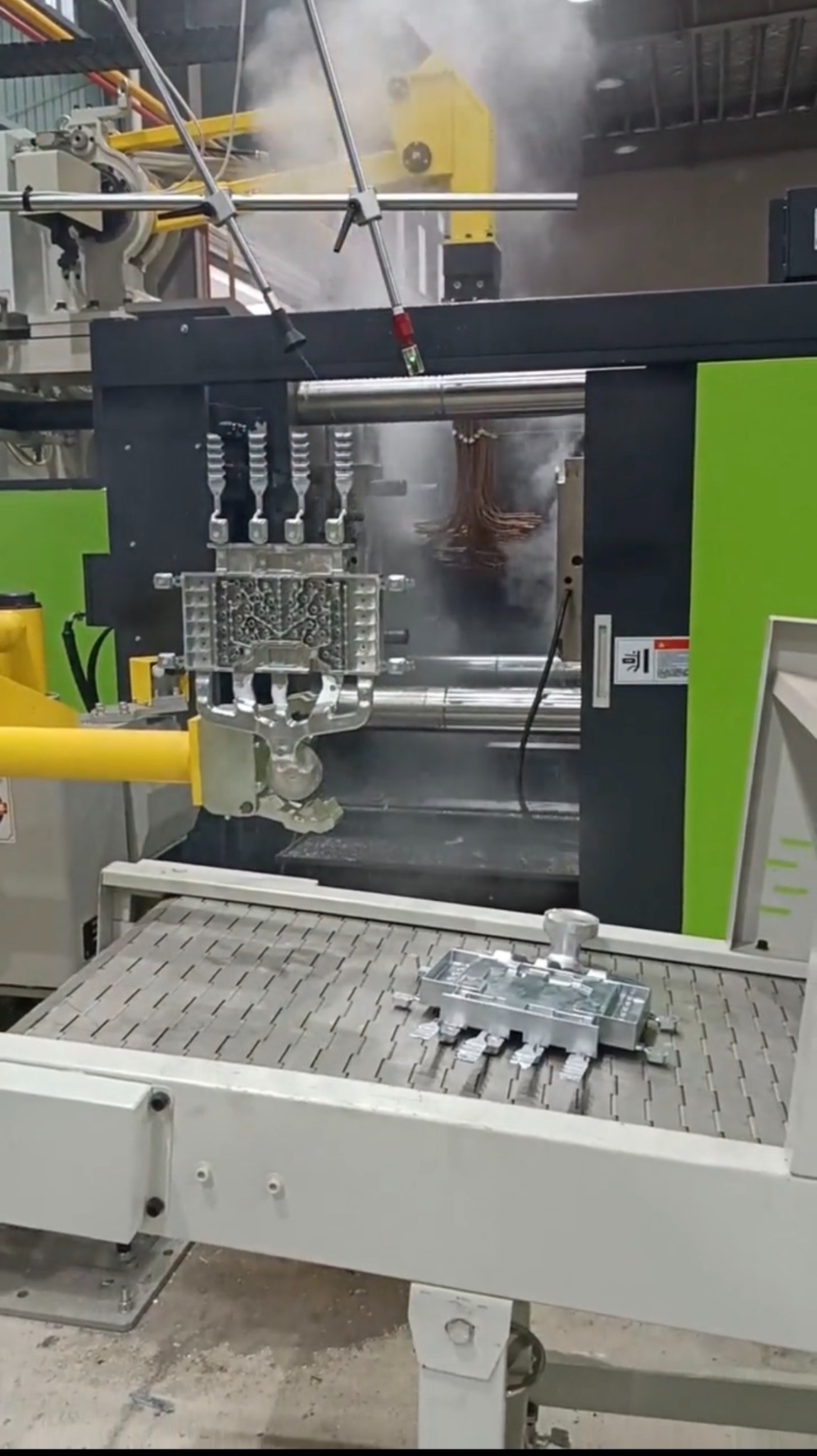
5. Avoid Turning a Die Casting Into 'Cast Blank + Extensive CNC'
Secondary machining is appropriate for sealing surfaces, precise locating faces, threads and other critical interfaces. But many machining directions, repeated setups, large machined areas, excessive stock or complex fixtures can consume the cost advantage of die casting.
A practical principle is to let die casting create the main geometry and machine only the features that truly require it. Keep noncritical areas as-cast where appropriate, align machining directions where possible, define locating datums clearly and review the risk of exposing internal porosity.
When a project requires CNC machining beyond HSX's stated in-house process boundary, HSX can coordinate partner-supported manufacturing resources according to the project requirements.
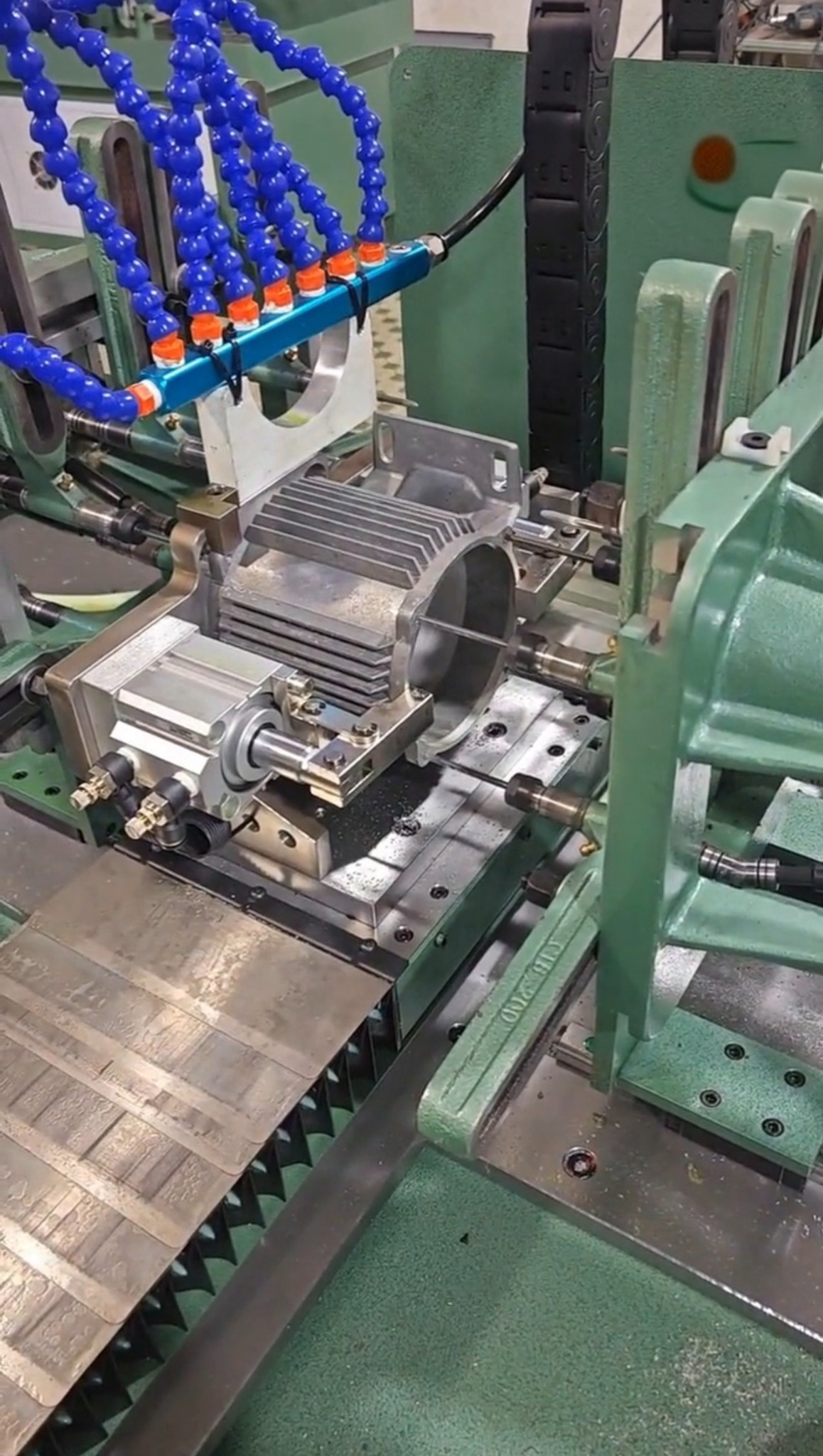
6. The Most Expensive Defect May Be Found After Value Has Already Been Added
A casting can look acceptable immediately after die casting and still fail later. A leak, exposed pore, distortion or functional dimensional problem may appear only after trimming, machining, blasting, coating or final inspection. By then, previous processing cost has already been invested, so yield is influenced by design, tooling, machining locations and sealing requirements long before final inspection.
7. Why Three Suppliers Can Quote the Same Drawing Differently
The same drawing can receive three different prices because the suppliers may not be pricing the same manufacturing plan.
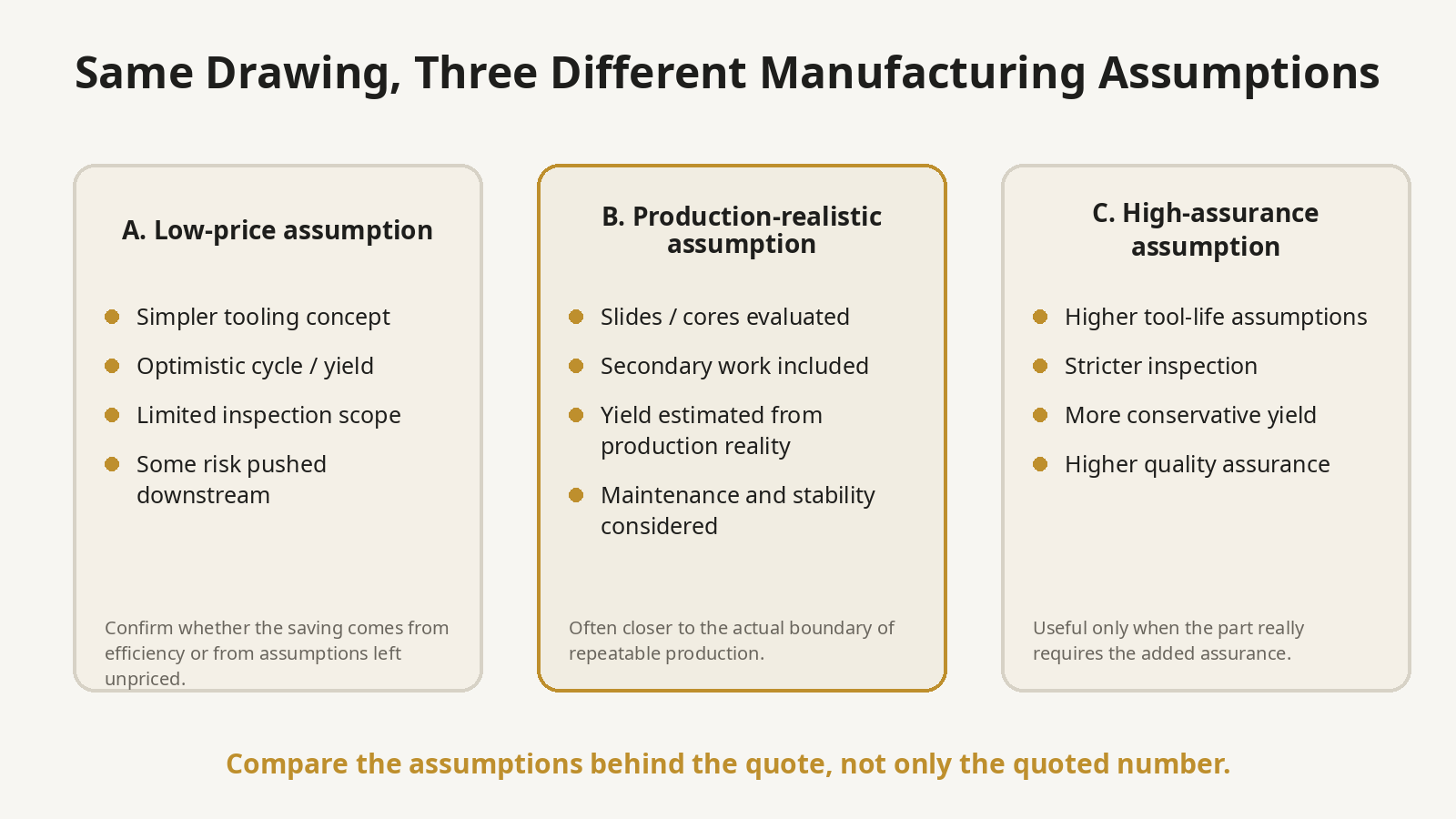
7.1 Scenario A: Low-Price Manufacturing Assumption
A lower quotation may assume a simpler tooling concept, a more optimistic cycle, a more optimistic yield, less inspection or more downstream problem solving. The key is to understand whether the saving comes from better manufacturing efficiency or from risk that has not been included.
7.2 Scenario B: Production-Realistic Manufacturing Assumption
Another supplier may include more complete slide and cooling considerations, realistic secondary-operation scope, inspection requirements, production yield and maintenance. This quotation may not be the lowest, but it can be closer to the cost boundary of repeatable production.
7.3 Scenario C: High-Assurance Manufacturing Assumption
A higher quotation may assume longer tool life, stricter inspection, more conservative yield and greater quality assurance. That does not automatically mean the supplier is overcharging; the real question is whether the part actually requires that level of assurance.
8. A Die Casting Quote Review Checklist for Buyers
Instead of starting with 'Can you make it cheaper?', first make the manufacturing boundary clear.
Process and material: why die casting was selected; net weight, shot weight, utilization, alloy and material-control requirements.
Tooling and equipment: parting strategy, slides, cores, inserts, expected tool life, machine size, cavity count and cycle assumptions.
Flow and secondary operations: hot spots, gates, venting, cooling, machining scope, directions, setups and finishing requirements.
Inspection and yield: required checks, sampling or 100% inspection, functional testing and the yield assumptions behind the price.
Volume and commercial boundary: tooling amortization quantity, packing, freight, tool maintenance, engineering changes and payment terms.
Professional quote review is not only 'How much cheaper can this be?' It is 'Which manufacturing assumption creates this price difference?'
9. Where Real Die Casting Cost Reduction Usually Comes From
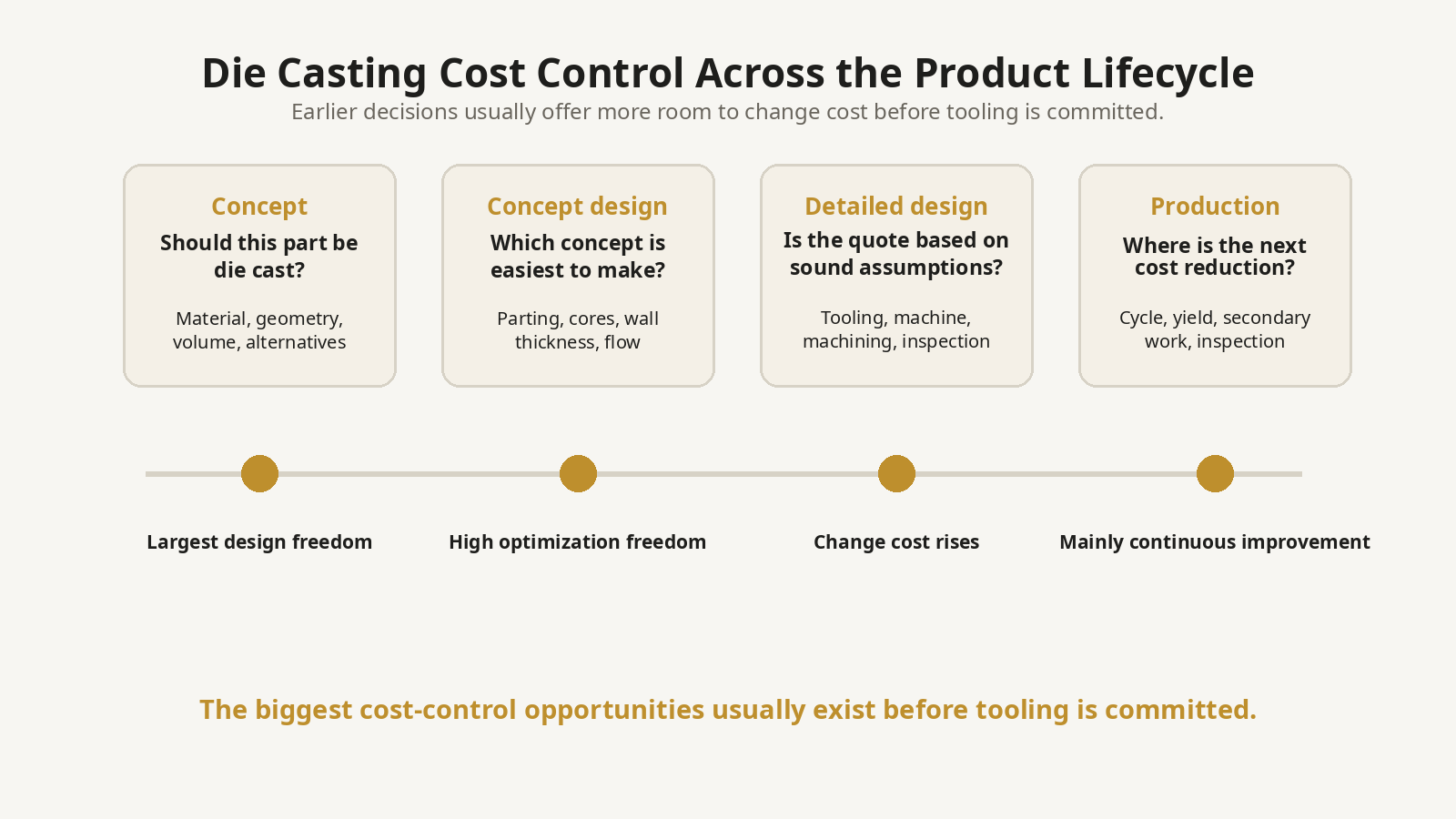
Once the tool is built and the part is in production, large cost reductions become harder. The highest-value opportunities often exist before the drawing is frozen.
Confirm that die casting is the right process for the expected volume, geometry, material and functional requirements; remove unnecessary slides or cores where practical.
Reduce unnecessary hot spots and control secondary machining by using more uniform walls, useful ribs, smoother transitions and clearly defined functional surfaces.
Define cosmetic zones, critical dimensions, sealing requirements and inspection methods early so suppliers do not have to price different assumptions.
10. What Information Helps Build a More Meaningful Die Casting Quote?
A supplier can review the manufacturing assumptions more accurately when the project information is complete.
Drawing data: 2D drawing plus STEP or STP 3D file, material requirement, critical dimensions and tolerances.
Project demand: expected quantity, assembly interfaces and application environment.
Finishing and acceptance: surface finishing, cosmetic requirements and any functional or sealing requirements.
Commercial and physical reference: packing requirements plus an existing sample or reference part when available.
HSX reviews each project against the actual drawing, part geometry and requirements. The review can include whether die casting is suitable, likely tooling considerations, applicable in-house manufacturing steps, project-specific partner-supported processes, major manufacturing risks and the technical information required for quotation.
Clarifying the manufacturing assumptions before comparing price usually produces a more meaningful sourcing decision than comparing the lowest number alone.
Related HSX evidence
Apply the quotation comparison to motor housings or equipment enclosures using the same drawing revision, quantity, finishing scope and inspection basis.
Continue reading
Convert general guidance into a project-specific review.
Share a drawing, 3D file, sample or requirement so HSX can review the actual geometry, process route and finishing boundary.