HSX BLOG
Sandblasting vs Spray Painting vs Powder Coating vs E-Coating: What Is the Difference for Aluminum Die Cast Parts?
Quick answer: Sandblasting is mainly a surface-preparation process. It changes the condition and roughness of the aluminum surface but does not create an independent organic protective film. Spray painting, powder coating and e-coating are film-forming finishes. The right route therefore starts with surface
Quick answer: Sandblasting is mainly a surface-preparation process. It changes the condition and roughness of the aluminum surface but does not create an independent organic protective film. Spray painting, powder coating and e-coating are film-forming finishes. The right route therefore starts with surface preparation, then selects the final coating according to appearance, corrosion resistance, film thickness, geometry, masking, assembly and inspection requirements.
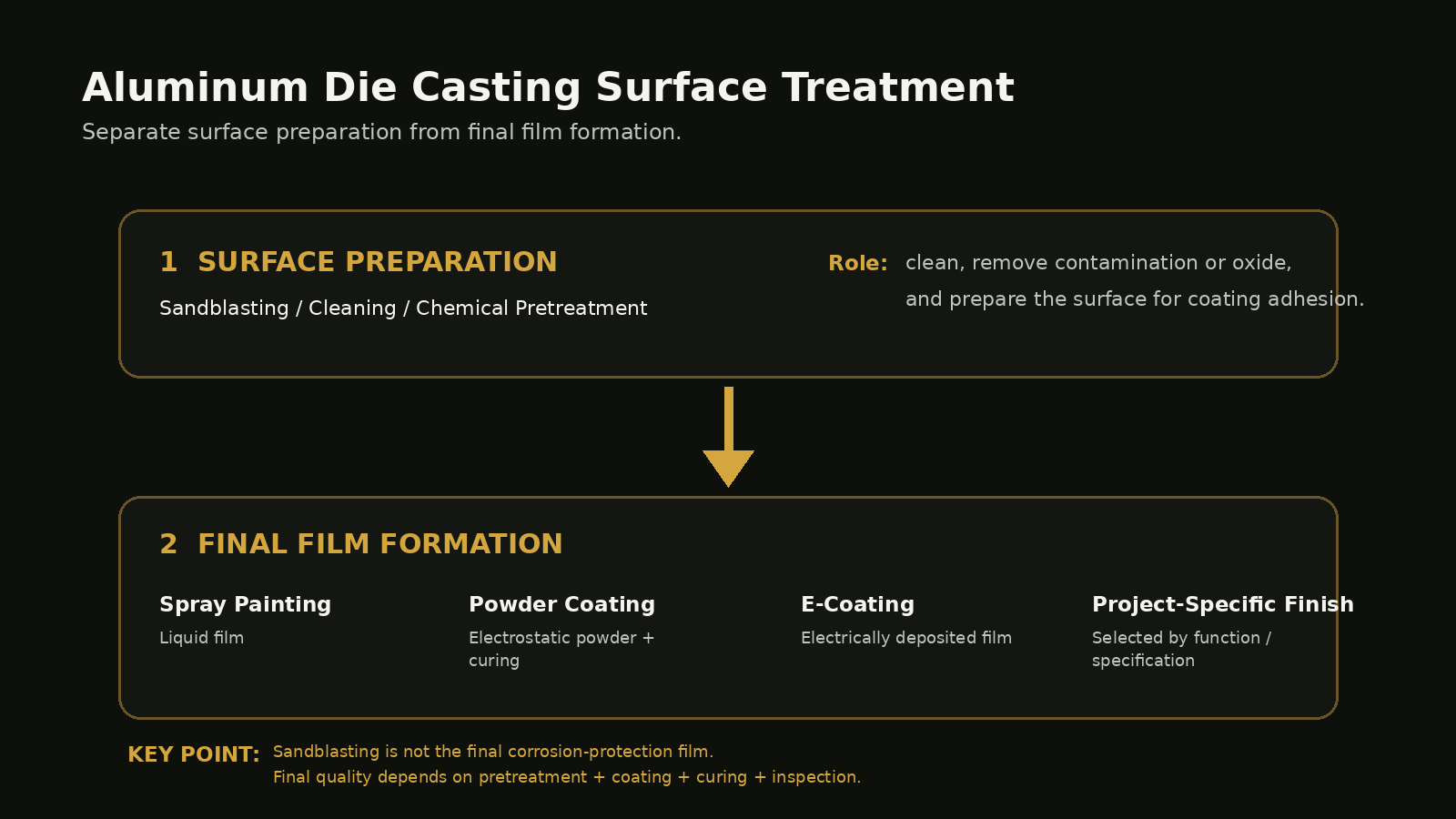
These processes are often grouped together under “surface treatment,” but they do different jobs in the manufacturing chain. A practical project review should first separate surface preparation from final film formation.
1. Sandblasting: Surface Preparation, Not a Final Protective Coating
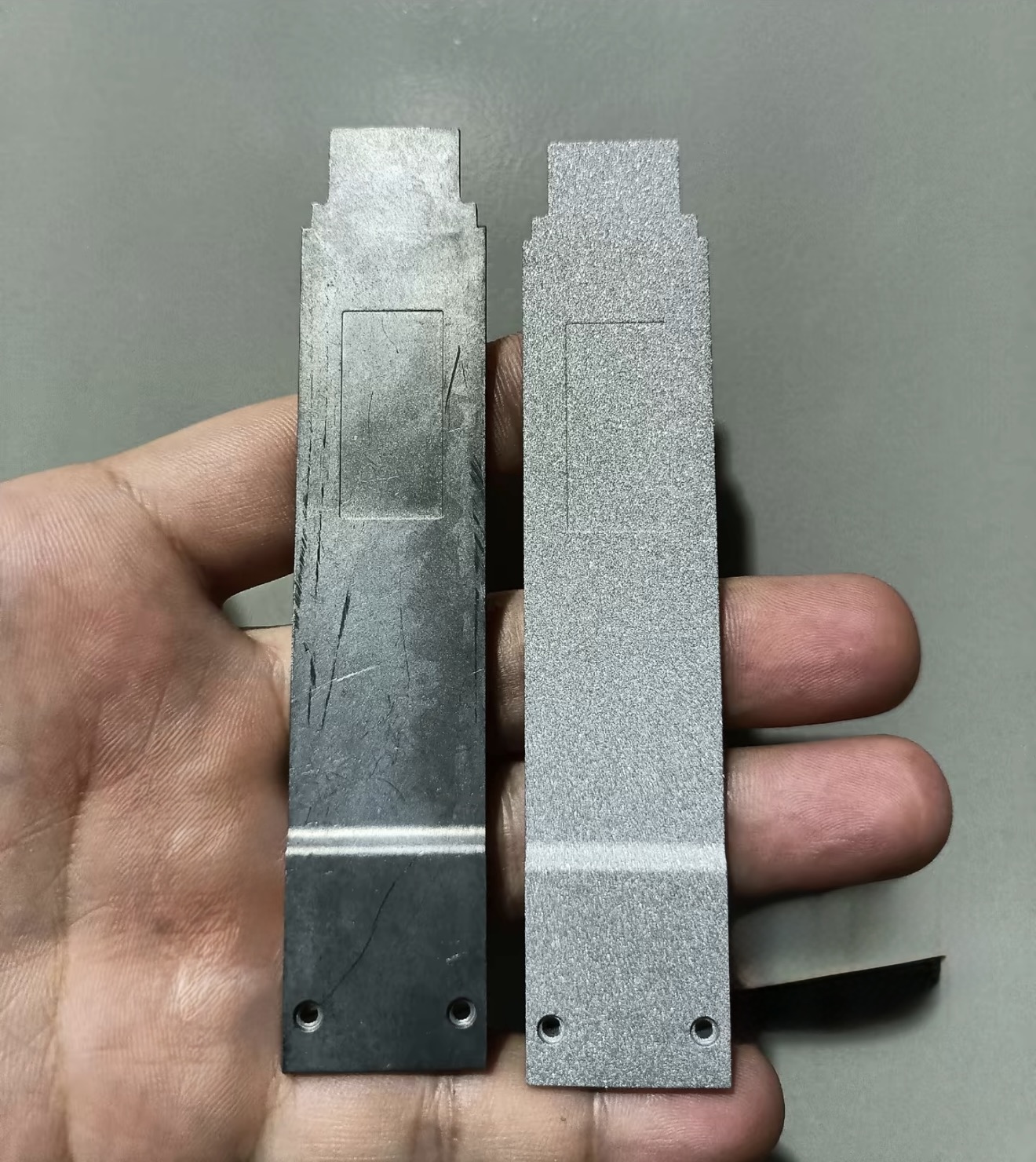
Sandblasting is a physical surface-preparation process. Abrasive media strikes the part at high speed to remove surface contamination, some oxide layers or old coating residue, while creating a more uniform surface profile.
Its value is usually not that it “adds a coating.” Instead, it prepares the surface for later finishing. The roughened surface can improve the mechanical anchoring conditions for a subsequent coating system.
For aluminum die cast parts, blasting parameters still matter. Media type, particle size, pressure, distance and exposure time can change the final roughness. Sensitive sealing faces, cosmetic zones, sharp edges and dimension-critical features should not simply be made “as rough as possible.”
A sandblasted aluminum casting should not automatically be considered corrosion-protected. Cleaning after blasting, residual contamination control and the time before the next coating step can all affect the final result.
2. Spray Painting: A Flexible Liquid Film-Forming Process
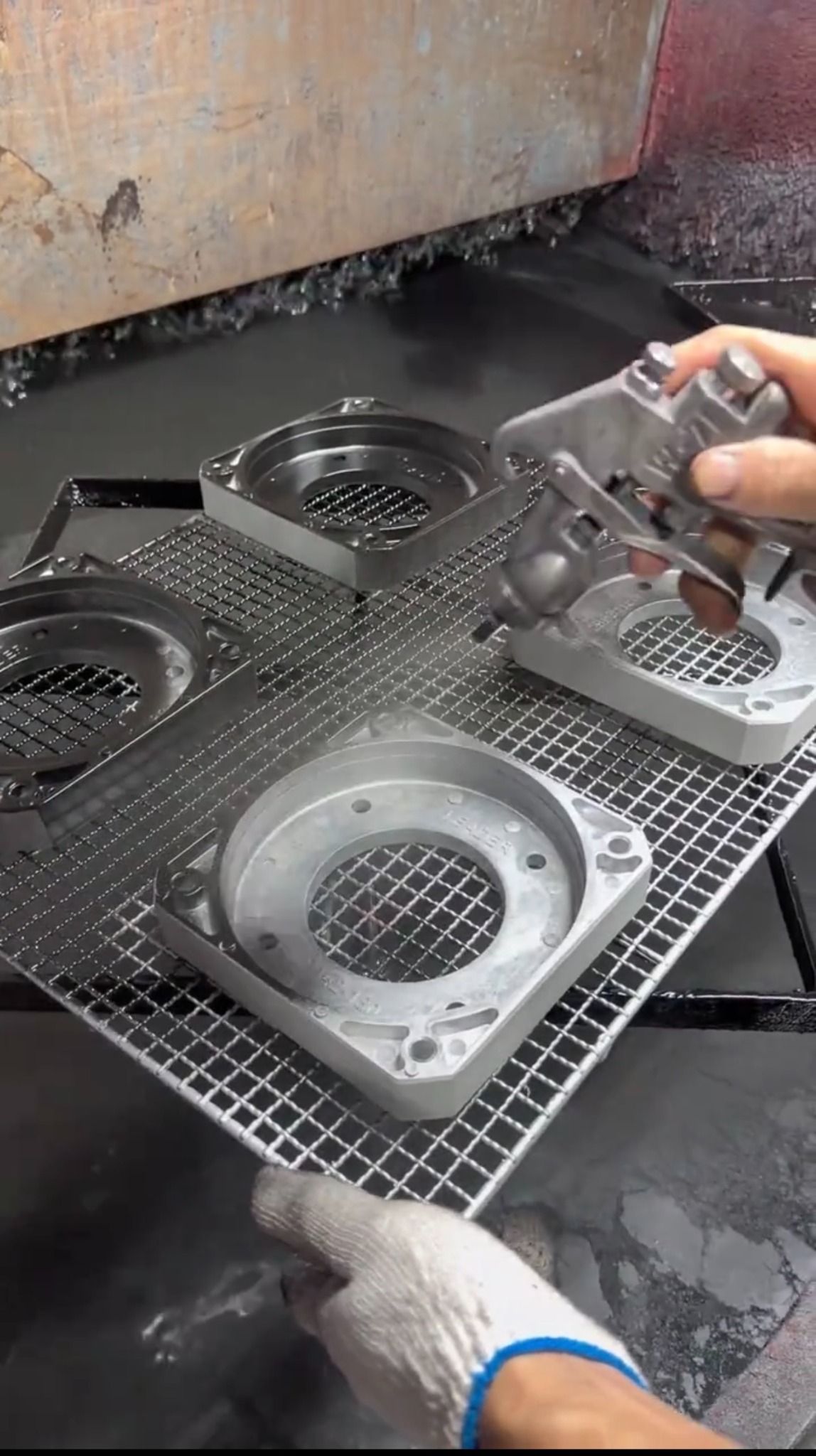
Spray painting is a final film-forming process. Liquid coating is atomized through a spray gun, deposited on the part, then leveled, dried or cured to create a continuous film.
Its main strength is flexibility. Color, gloss, texture, local appearance and coating chemistry can be adjusted to suit different product requirements.
Paint quality cannot be judged only by whether the part looks fully covered. Surface cleanliness, pretreatment, gun type, atomization, spray distance, temperature, humidity, leveling and curing all influence appearance, adhesion and long-term durability.
Conventional air spraying can have lower transfer efficiency than electrostatic powder coating, but there is no single transfer-efficiency percentage that applies to every liquid-paint system. Equipment, automation, part geometry, electrostatic assistance and recovery conditions all change the result.
3. Powder Coating: Electrostatic Powder Followed by Thermal Curing
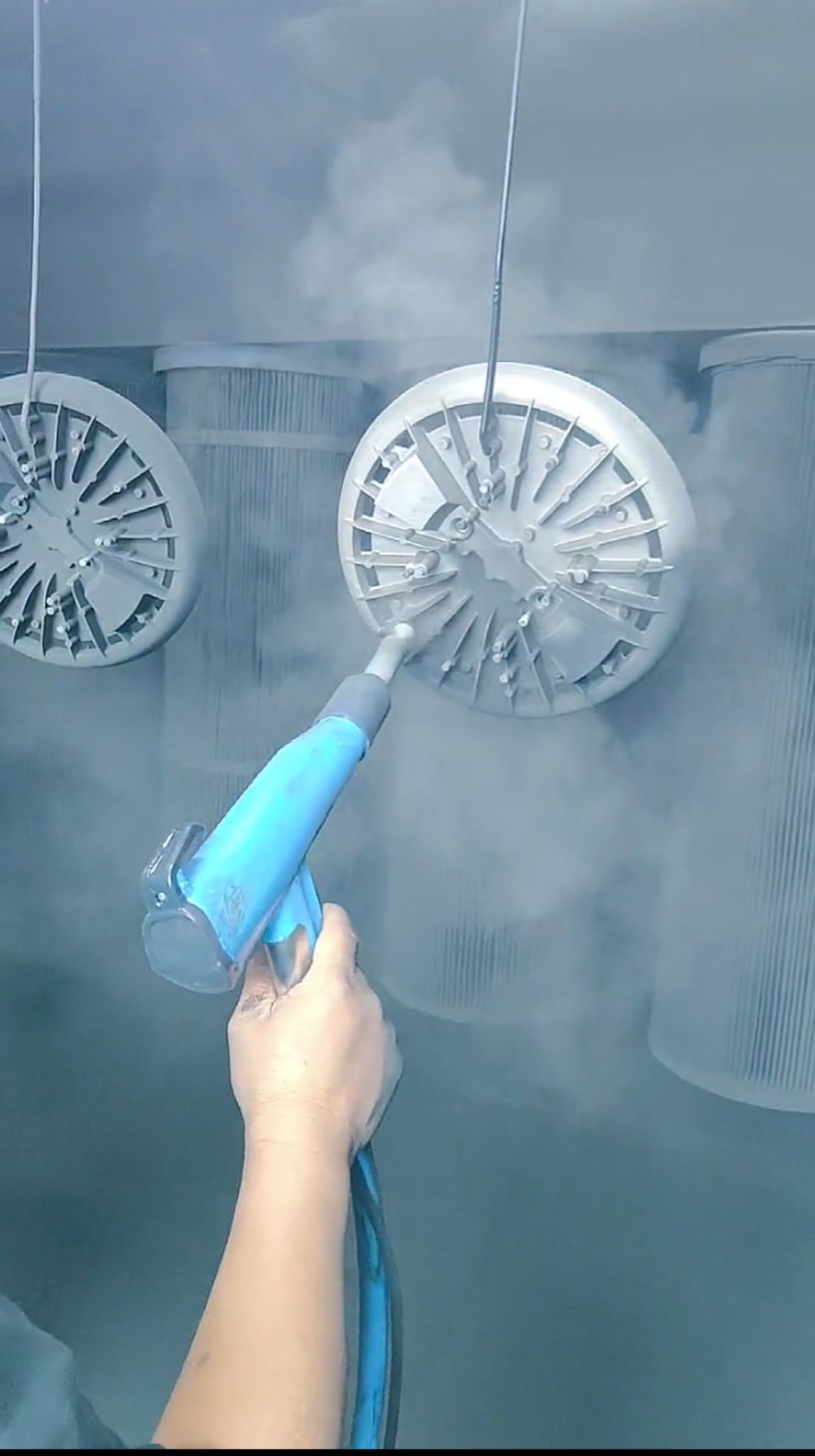
Powder coating is also a final film-forming process. Solid powder is electrostatically attracted to the workpiece, then the coated part is heated so the powder melts, levels and cures into a continuous coating.
For industrial housings, brackets, profiles, structural parts and heat-dissipation components, powder coating is a common production finish.
One advantage is material utilization. In a suitable booth and recovery system, oversprayed powder can often be recovered and reused. Actual efficiency still depends on color-change frequency, part geometry, recovery equipment and booth management.
Many industrial powder-coated parts use film builds from several tens of micrometers to more than one hundred micrometers. A 60–120 μm range can be a useful project reference in some systems, but it should not be treated as a universal requirement. The correct target comes from the coating system, drawing and customer specification.
Thicker is not automatically better. Excessive film build can create edge accumulation, leveling problems and dimensional interference at threads, holes, sealing faces or assembly interfaces. Deep grooves, shielding and complex fin geometry can also make film uniformity more difficult.
4. E-Coating: Electrically Deposited Film With Good Coverage Consistency
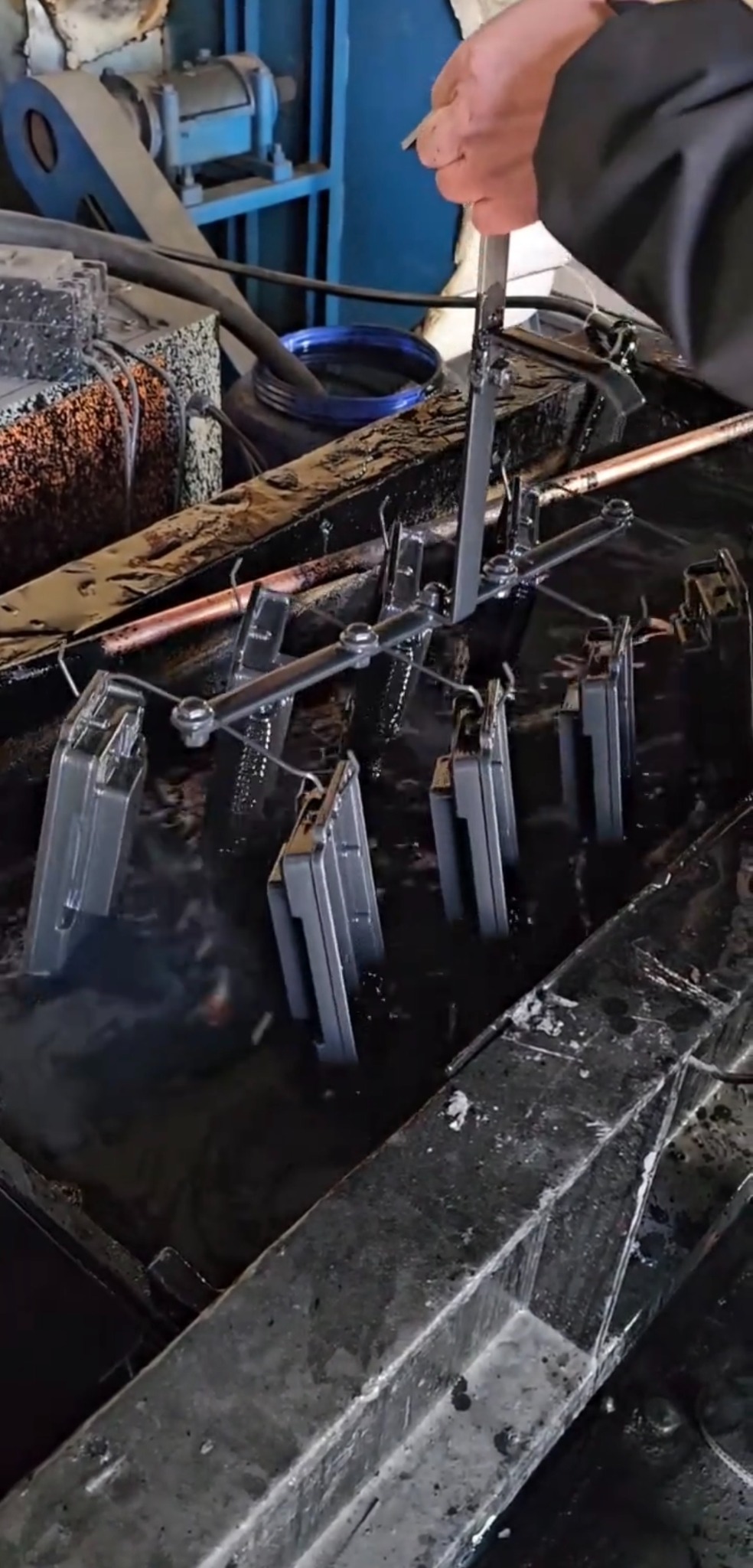
E-coating is another final film-forming process, but its deposition method is different from conventional spray painting. The part is immersed in a coating bath and an electrical field drives charged coating particles onto conductive surfaces before curing.
A key advantage is film uniformity. Compared with coating only from the outside, e-coating can provide better coverage consistency on complex geometry, recesses and some internal areas.
This can make it valuable for production programs that need consistent corrosion protection and repeatable coating coverage.
E-coating is not simply “dip the part in a tank and apply electricity.” It depends on controlled pretreatment, bath chemistry, electrical conditions, rinsing and curing. The exact pretreatment chemistry should be selected according to the substrate, customer specification and coating system. It is not appropriate to state that every aluminum die casting project must use one specific phosphate chemistry.
5. The Step Most Often Overlooked: Pretreatment Before the Final Coating
Many coating failures are blamed on the final process: “the powder coating is bad,” “the paint is peeling,” or “the e-coat failed.” The root cause, however, may have been created earlier.
During die casting, trimming, machining, handling and storage, aluminum parts can carry release-agent residue, oil, oxide, dust or other contamination. If these are not controlled before film formation, even a visually uniform coating can later show weak adhesion, blistering, peeling, local corrosion or unstable appearance.
A useful sequence is: confirm the alloy and surface condition → select cleaning, mechanical or chemical pretreatment → apply the final film-forming finish → confirm curing, masking, film thickness and inspection.
6. Coating Thickness Is Not “The Thicker, the Better”
It is tempting to rank e-coating, liquid paint, powder coating and thermal spray simply from thin to thick. That can be useful as a rough mental picture, but it should not be treated as a fixed industry rule because coating systems and application methods overlap.
In many common industrial systems, e-coating is relatively thin, powder coating is often thicker, and thermal spray can cover a much wider thickness range. The actual requirement still depends on the coating system, part geometry, mating dimensions and performance target.
Excess thickness can cause edge build-up, poor leveling, interference at threads or holes, altered assembly clearances and unnecessary material or rework cost. The correct target is a stable coating that meets the requirement, not the maximum possible thickness.
7. Sandblasting, Spray Painting, Powder Coating and E-Coating Compared
Sandblasting — Process position: surface preparation. Independent film: no. Main role: cleaning and roughening the surface to improve the foundation for later coating.
Spray painting — Process position: final film formation. Independent film: yes. Main strengths: flexible color, gloss, appearance and coating selection.
Powder coating — Process position: final film formation. Independent film: yes. Main strengths: efficient industrial production, relatively high material utilization and broad use on housings and structural parts.
E-coating — Process position: final film formation. Independent film: yes. Main strengths: relatively uniform film and good coverage consistency on complex conductive geometry.
The comparison should therefore begin with each process’s role in the manufacturing chain, not with a simple “which one is more advanced?” ranking.
8. Where Does Thermal Spray Fit?
Thermal spray is better understood as a separate class of functional surface engineering rather than the “fourth level” after painting, powder coating and e-coating.
The process heats metal, alloy or ceramic feedstock to a molten or semi-molten state and propels it onto the substrate to build a functional coating. Arc-sprayed zinc, sprayed aluminum and other systems can be used for long-term corrosion protection or other specialized functions.
Its equipment, coating materials, thickness range, sealing system, performance target and test methods differ substantially from conventional paint, powder coating and e-coating. Salt-spray performance should not be quoted as one fixed number without defining the complete coating system and test standard.
9. How Should an Aluminum Die Cast Part Choose a Surface-Treatment Route?
The useful question is not “Which is best: sandblasting, paint, powder coating or e-coating?” The useful question is “What problem must this part solve?”
Define the target: surface cleaning and roughening only, or final corrosion protection, appearance, insulation, masking or another functional requirement.
Confirm the alloy and current surface condition: as-cast, machined, oily, oxidized, contaminated or dimension-sensitive.
Select the pretreatment that matches the substrate, final coating and customer specification.
Choose the film-forming finish according to color, appearance, corrosion requirement, geometry coverage, film thickness, production volume, cost and assembly needs.
Validate the result: film thickness, masking, critical dimensions, adhesion, appearance and any required functional tests.
10. What Should Be Specified on the Drawing or RFQ?
Base material or aluminum alloy and whether the part is as-cast, machined or already pretreated.
Final appearance: color, gloss, texture, approved sample or allowable color difference.
Areas that must remain uncoated or masked: threads, sealing faces, grounding zones, electrical contact areas, mating surfaces and holes.
Required film thickness and tolerance, when the project has a defined specification.
Adhesion, corrosion, appearance or other functional tests, including the applicable test standard.
Sample-approval method, inspection method and production acceptance criteria.
If these points are not defined, different suppliers may assume different pretreatments, coating thicknesses, inspection requirements and cosmetic standards. The resulting quotations may therefore represent different manufacturing boundaries rather than a simple price difference for the same process.
11. What HSX Reviews in a Surface-Treatment Project
At HSX, surface treatment is reviewed together with the material, part geometry, functional interfaces, assembly and customer acceptance requirements. For in-house spray painting and powder coating, the project review can define pretreatment, masking, surface and inspection boundaries according to the approved part requirements.
When a project requires a process outside HSX’s stated in-house capability boundary, the requirement should be evaluated for that specific project and coordinated through suitable manufacturing resources rather than described as a standard in-house process.
The engineering goal is not to label one finish as “high-end” and another as “low-end.” The goal is to choose a complete surface-treatment route that fits the part and can be repeated consistently.
Conclusion: Separate the Process Role Before Choosing the Finish
Sandblasting mainly prepares the surface. Spray painting, powder coating and e-coating create the final film. Thermal spray belongs more naturally to functional surface engineering. These processes should not be mixed into one fixed hierarchy based only on price or coating thickness.
For aluminum die cast parts, a reliable surface-treatment route follows the full chain: alloy and surface condition → pretreatment → final film formation → curing → masking → film-thickness and functional inspection. Looking only at the last coating step can hide the earlier decisions that actually control adhesion, appearance and durability.
Related HSX evidence
Keep the finish comparison tied to the part's function, visible zones and the confirmed in-house or partner-supported route.
Continue reading
Convert general guidance into a project-specific review.
Share a drawing, 3D file, sample or requirement so HSX can review the actual geometry, process route and finishing boundary.