HSX BLOG
Why Can Quality Problems Still Occur with a One-Stop Aluminum Die Casting Supplier?
Complete processes and SOPs reduce risk, but stable production also requires experienced people, in-process sampling, active supervision and final inspection working together. Quick answer: A complete process list proves that a supplier can coordinate the required work. It does not prove that every production condition
Complete processes and SOPs reduce risk, but stable production also requires experienced people, in-process sampling, active supervision and final inspection working together.
Quick answer: A complete process list proves that a supplier can coordinate the required work. It does not prove that every production condition will remain stable throughout a batch. SOPs establish the baseline; experienced people, in-process inspection and active supervision are what detect drift before it reaches final inspection or delivery.
Typical buyer scenario: A supplier has tooling, aluminum die casting, trimming, drilling, finishing, inspection and packing support. The sample stage looks acceptable, but the customer later finds surface, dimensional or assembly variation in mass-production deliveries. The missing issue may not be a process step. It may be that the actual production state changed and the change was not identified or contained early enough.
Based on HSX production experience, stable quality is a combined result: an SOP defines the baseline, experienced personnel recognize changes on the shop floor, in-process checks detect drift, supervision drives containment and corrective action, and final inspection provides the last verification. When one layer is weak, a defect can continue through downstream operations even though the documented route looks complete.
1. One-Stop Capability Proves Scope, Not Continuous Process Control
A one-stop supply route can reduce communication gaps and coordinate tooling, casting, trimming, drilling and the required secondary operations . Buyers should still distinguish between a supplier’s available process scope and its ability to keep each process controlled over a full production batch.
A factory may have broad manufacturing capabilities , sufficient equipment and an experienced team. Quality can still escape when handoff criteria are unclear, abnormalities are not reported, partner-supported operations are not rechecked, or no one has the authority to stop, isolate and correct the affected lot.
For a broader first-stage supplier screen, buyers can also review how to choose an aluminum die casting manufacturer in China . This article focuses on the next question: how to judge whether the production process is actively controlled after the project enters mass production.
2. An SOP Is a Production Baseline, Not an Autopilot System
An SOP standardizes normal operating conditions, work steps, inspection items and response requirements. It is essential because it reduces unnecessary variation between operators, shifts and batches. But it cannot make every abnormal condition disappear automatically.
A procedure can specify furnace temperature, die temperature, injection settings, die spray and inspection frequency. It cannot replace the judgment required to decide whether those settings still match the actual condition of the molten metal, die, machine and casting at that moment.
The practical distinction is simple: SOPs reduce variation; experience, inspection and supervision identify process drift that can still occur while the SOP is being followed.
3. Setpoints Can Stay the Same While the Real Process Changes
Buyers sometimes ask why quality can move when the machine settings have not changed. The reason is that a stable setpoint does not mean the complete physical process is unchanged.
The furnace setpoint may remain unchanged while molten-metal condition, holding time and production rhythm vary.
Ambient temperature and humidity change with the weather and can alter the real shop-floor conditions around the machine, die spray, blow-off and manual work.
A die repeatedly heats, cools and is exposed to molten-aluminum flow. With production time, cavity surfaces, gates, vents and fitted areas can gradually change through erosion, wear or buildup.
Automation can repeat a programmed action accurately, but it does not replace every human observation of ejection behavior, casting surfaces, machine sound or die condition.
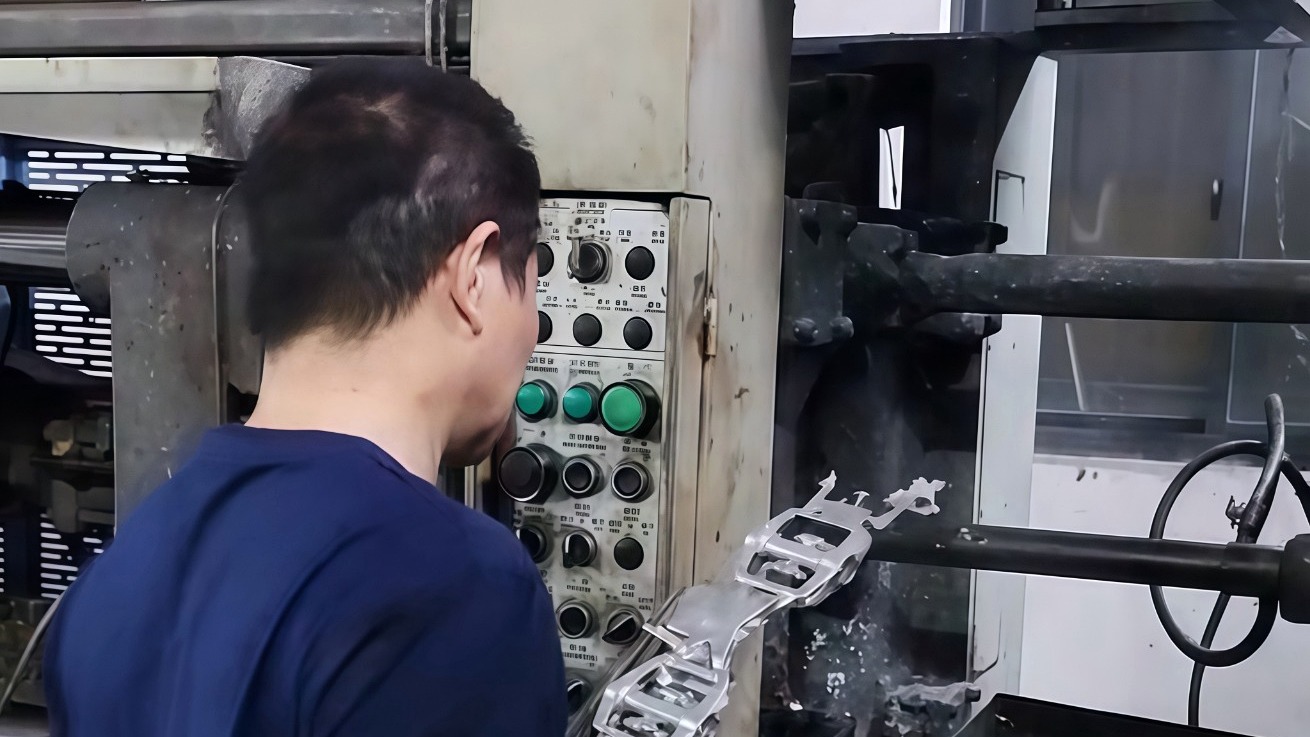
4. Experienced People Connect the SOP to the Shop Floor
The value of an experienced operator or supervisor is not to replace the standard with instinct. It is to recognize when the real production state has started to move away from the expected condition.
With the same displayed settings, experienced personnel may notice a different ejection sound, a change on the casting surface, a new machine vibration, a die area that needs attention, or a gradual shift after continuous production. These signals can trigger a closer check before the variation becomes a batch-level problem.
If a factory only asks people to complete the checklist, but no one owns the interpretation of abnormal signals, the SOP can become a finished record rather than an effective quality-control tool.
5. In-Process Inspection Should Respond to Events, Not Only the Clock
First-piece inspection, scheduled patrol checks and final inspection are all necessary. Production changes, however, do not always happen exactly at the planned inspection time. A controlled process also needs event-triggered checks when the shift changes, material changes, die condition changes, machine sound becomes unusual, the casting surface begins to vary, or the line has been running continuously for a meaningful period.
The purpose of in-process sampling is to catch drift near the moment it begins. The earlier a dimensional, visual or assembly condition moves outside the expected window, the easier it is to limit the affected quantity and prevent suspect parts from entering drilling, blasting, coating, painting, packing or other downstream work.
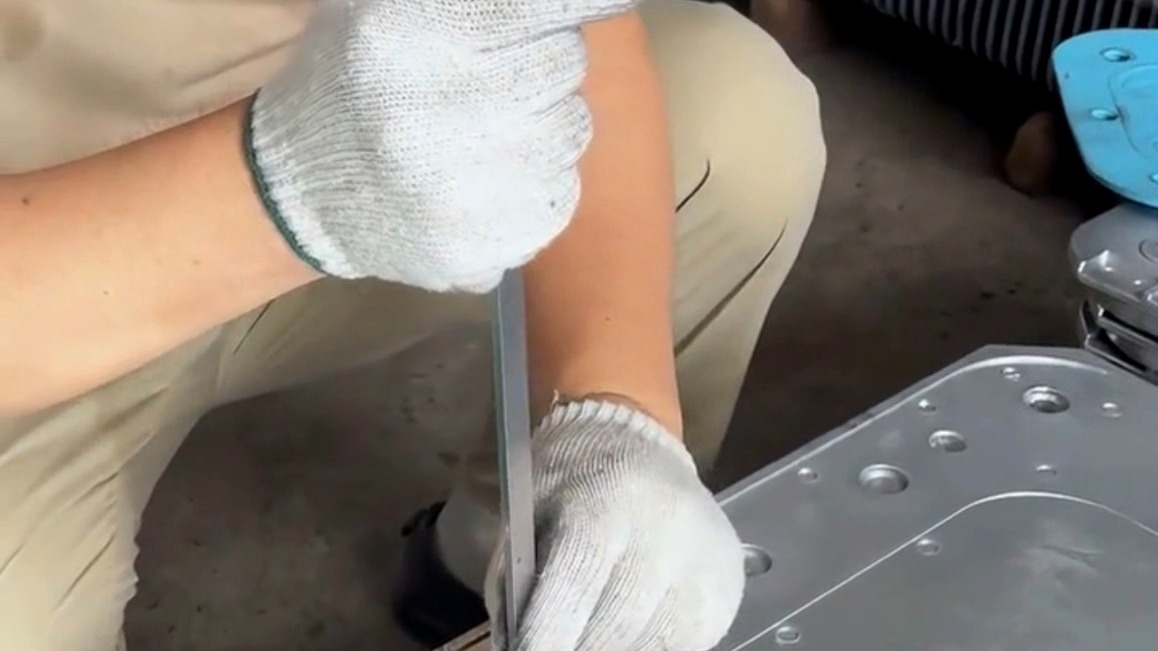
6. Supervision Must Close the Loop Before Final Inspection
Some factories do not lack equipment, personnel or process support. The weaker link is supervision and closure. An inspection may be performed but not reviewed. An abnormality may be noticed but production continues. A downstream operation may accept parts without confirming the critical quality status. By the time final inspection identifies the problem, the cost has already accumulated.
Effective control requires clear responsibility: who observes the process, who performs the check, who can stop production, who isolates the lot, who confirms the corrective action, and who authorizes the restart. A procedure becomes useful only when responsibility and action are connected.
Final inspection remains essential, but it should be the last defense, not the first place a problem is discovered. If a defect is first found before shipment, casting, trimming, drilling, blasting, finishing and packing costs may already have been added, along with rework, sorting, scrap and delivery risk.
7. What Should Buyers Ask Before Requesting an Aluminum Die Casting Quote?
When evaluating a custom aluminum die casting supplier, buyers should look beyond machine lists and the phrase “one-stop service.” A useful RFQ checklist for custom OEM aluminum die casting parts helps define the product, but supplier evaluation should also test how production variation is detected and controlled.
Do you have SOPs? A more useful follow-up is: Who recognizes when production has moved away from the SOP, and what happens next?
Do you provide one-stop service? A more useful follow-up is: Which operations are in-house, which are partner-supported, and how are handoff, reinspection and traceability controlled?
Do you use automation? A more useful follow-up is: Who monitors the actual casting results, equipment trends and abnormal signals when an automated cycle begins to drift?
Do you have a quality department? A more useful follow-up is: How do first-piece checks, scheduled checks, event-triggered sampling and final inspection work together?
Are your people and equipment sufficient? A more useful follow-up is: Who owns shop-floor supervision, who can stop production, and who confirms that corrective action is closed?
Can you provide an aluminum die casting quote? A more useful follow-up is: Before quoting, does the supplier confirm critical dimensions, visible surfaces, finishing, assembly and sampling requirements rather than calculating only from weight and quantity?
The same questions should be reflected in the supplier’s actual project workflow , not only in a presentation or audit checklist.
Practical Takeaway for Aluminum Die Casting Buyers
One-stop capability, automation and SOPs are important foundations when choosing an aluminum die casting supplier. They do not guarantee batch stability by themselves. Buyers should also evaluate whether the supplier can recognize changing production conditions, inspect at the right moments, stop and isolate affected parts, close corrective actions and trace the result.
Based on HSX production experience, stable quality is not created by sorting at the shipping gate. It is built through standard procedures, experienced people, in-process inspection, active supervision and final verification working together throughout production.
Related HSX evidence
Use factory evidence, workflow ownership and process boundaries to assess supplier quality control.
Continue reading
Convert general guidance into a project-specific review.
Share a drawing, 3D file, sample or requirement so HSX can review the actual geometry, process route and finishing boundary.