HSX BLOG
Why Do Flow Marks Appear on Aluminum Die Cast Parts?
Seven areas to check when visible flow-related patterns appear on a casting surface.
What Do Flow Marks Look Like?
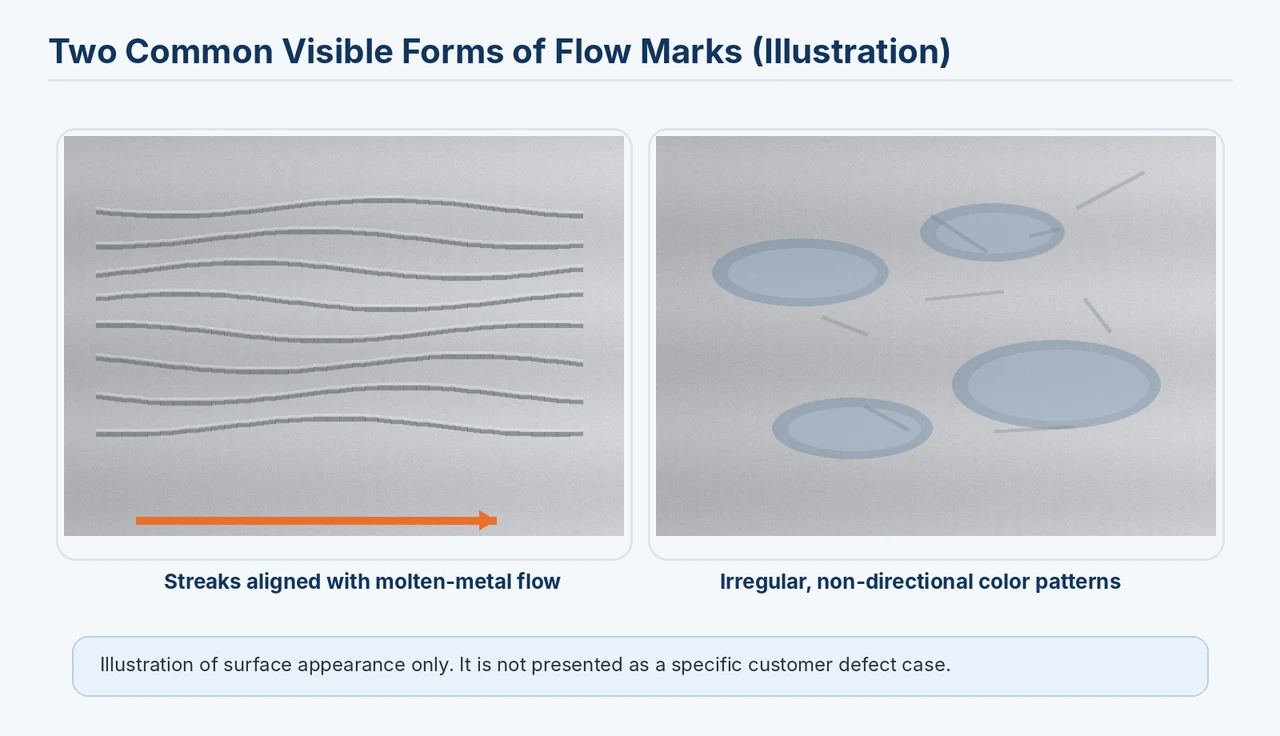
Flow marks are visible surface traces that can appear while molten aluminum is filling the die cavity. They may show as streaks aligned with the direction of metal flow. In other cases, the casting surface may show clearly visible, non-directional patterns whose color differs from the surrounding metal matrix.
These traces generally show no obvious tendency to extend or develop. When they recur, the useful question is not only what the mark looks like, but what happened to the molten aluminum during filling.
1. Die Temperature Is Too Low
Die temperature affects how quickly molten aluminum loses heat after it contacts the cavity surface. If the die is too cold, the metal can cool too quickly during filling. The flow front may then become less uniform, leaving visible flow-related patterns on the casting surface.
The appropriate die temperature depends on the part geometry, wall thickness, alloy, gating system and actual production conditions. Raising die temperature blindly is therefore not a universal solution.
2. Poor Runner Design or Ingate Position
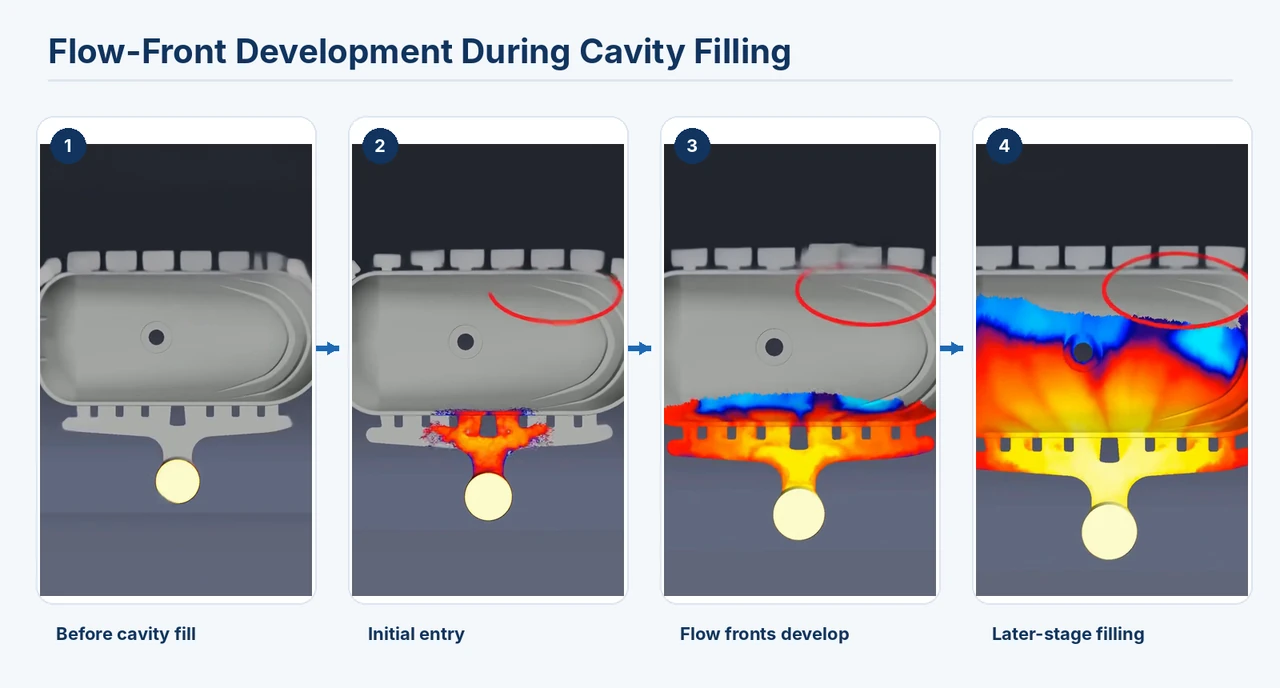
The runner and ingate determine how molten aluminum enters the cavity and how the flow front develops. If the runner layout is unsuitable or the ingate is positioned poorly, different flow fronts may travel different distances, lose heat at different rates, or meet under unfavorable conditions.
When a mark repeatedly appears in the same area, the intended flow path, runner layout and ingate position should be reviewed together.

3. Molten Metal Temperature Is Too Low
Molten aluminum needs sufficient fluidity while traveling through the runner and filling the cavity. If the metal temperature is too low, it can lose fluidity more quickly. Metal reaching later sections of the cavity may therefore be cooler and less able to merge smoothly with the earlier flow front.
Molten metal temperature should be reviewed together with die temperature and the overall filling condition.
4. Filling Speed Is Low or Filling Time Is Too Short
Based on our production experience, low filling speed and a filling time that is too short for the part are both conditions to review when flow marks appear. If the filling condition does not match the part geometry and gating layout, different areas of the cavity may fill under different thermal and flow conditions.
There is no single filling-speed or filling-time value that applies to every casting. The two conditions need to be evaluated as part of the complete filling system.
5. The Overall Gating System Is Unsuitable for the Part
The ingate is only one part of the metal-delivery path. The overall gating system determines how molten aluminum is divided, directed and distributed before and during cavity filling.
If the basic flow path is unsuitable for the casting geometry, changing machine parameters alone may reduce the visible symptom without addressing the underlying cause. The overall gating arrangement may also need to be reviewed.
6. Poor Venting
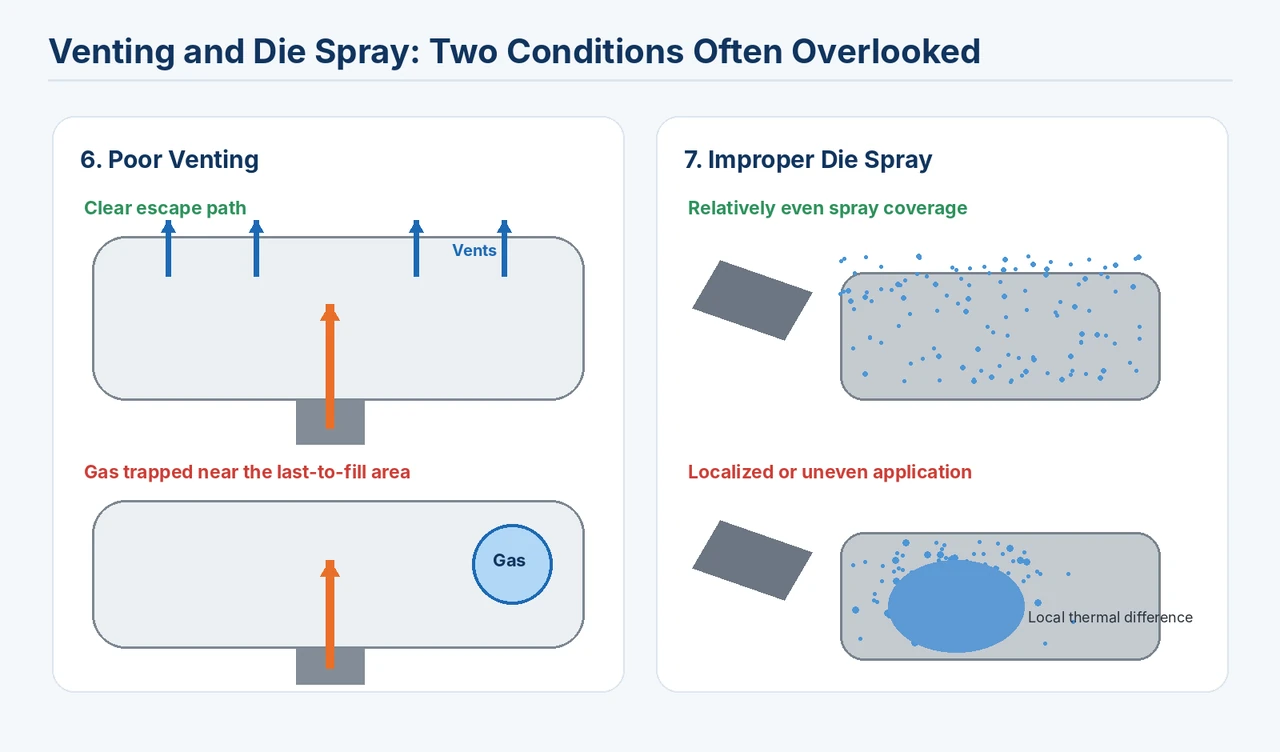
Air and gases inside the cavity need a suitable escape path while molten aluminum advances. If venting is poor, trapped gas can interfere with the flow front and disturb local filling behavior.
When a flow mark repeatedly occurs in a particular area, it is useful to ask two questions together: Where does the aluminum enter, and where is the air supposed to leave?
7. Improper Die Spray
Die spray affects the cavity surface condition and local die temperature. If the spray amount, position or application method is unsuitable, different areas of the die may develop different thermal conditions.
This can change how molten aluminum flows and cools when it reaches those areas. Spray practice should therefore be included when investigating recurring flow marks.
Flow Marks Usually Need a Filling-System Review
A common troubleshooting mistake is to see a surface defect and immediately change one machine parameter. Flow marks can involve several interacting factors: die temperature, molten metal temperature, runner and ingate design, filling speed and time, the overall gating system, venting and die spray.
A parameter change may reduce the visible mark without identifying why it occurred. For a recurring problem, the better approach is to review the complete filling process and determine where the flow condition begins to deviate from what the part requires.
What Information Helps With a Flow-Mark Review?
Useful project information can include clear photos of the affected area, a 2D drawing, a STEP or STP file, alloy requirements, wall thickness around the defect, gate and runner information if available, surface-treatment requirements, and whether the mark always appears in the same location.
A physical sample can also support project evaluation when necessary. The goal is not simply to name the defect, but to understand why it appears in that location on that particular casting.
Related HSX evidence
Connect defect diagnosis with process evidence and the project approval path.
Continue reading
Convert general guidance into a project-specific review.
Share a drawing, 3D file, sample or requirement so HSX can review the actual geometry, process route and finishing boundary.